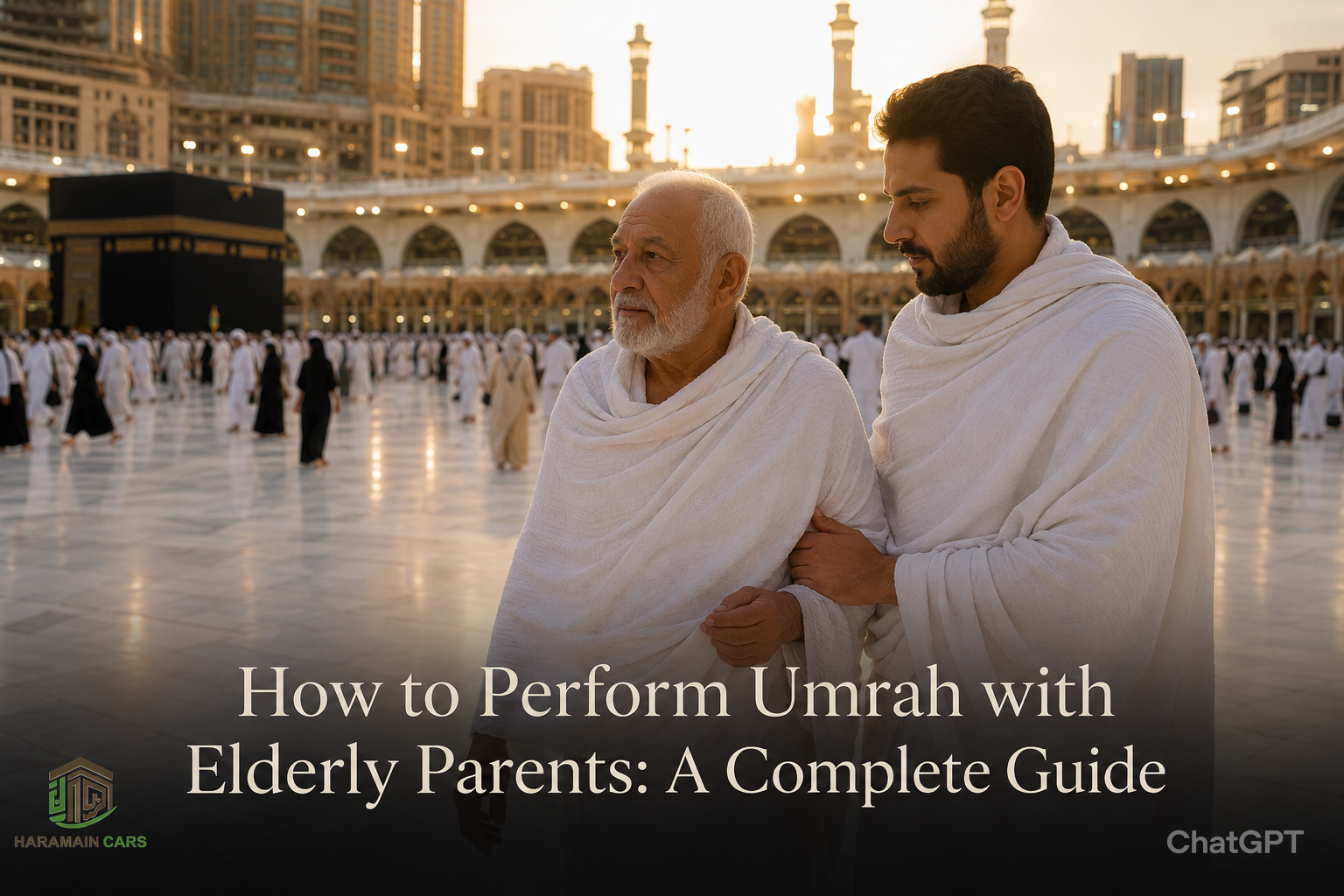
Performing Umrah is a dream that many Muslims carry for decades. For elderly parents, finally making that journey to the House of Allah is one of the most profound moments of their lives. But umrah for elderly pilgrims requires a different level of planning, patience, and care compared to travelling with younger family members.
If you are taking your parents or grandparents for Umrah, this guide walks you through everything you need to prepare, from medical considerations to transport, so the experience is smooth, safe, and spiritually fulfilling for everyone.
Why Umrah for Elderly Pilgrims Needs Special Planning
The physical demands of Umrah are real. Tawaf requires walking seven circuits around the Kaabah on marble floors. Sa’i involves walking between Safa and Marwa seven times, covering roughly 3.5 kilometres in total. The crowds, the heat, and the long distances between accommodation and the Haram all add up quickly.
For a healthy adult this is manageable. For someone planning umrah for elderly family members, an elderly parent with joint pain, heart conditions, or mobility limitations, it requires proper preparation. Umrah for elderly pilgrims is absolutely achievable, and thousands of older pilgrims complete it every year with the right support in place.
Get a Full Medical Checkup Before Your Umrah for Elderly Trip
Before booking anything, take your elderly parents for a thorough medical examination. Discuss the trip with their doctor and get clearance for travel. Make sure vaccinations required for Saudi Arabia are up to date, including meningitis, influenza, and any others recommended at the time of travel.
Carry a full set of medications in hand luggage, never in checked bags. Bring enough supply for the entire trip plus extra in case of delays. Keep a written list of all medications, dosages, and conditions in both English and Arabic if possible. A letter from the doctor summarizing their health history is also worth having on hand.
Choose the Right Time of Year for Umrah for Elderly Travel
Heat is the biggest physical risk for umrah for elderly travellers. Avoid the peak summer months of June, July, and August when temperatures in Makkah regularly exceed 45 degrees Celsius. The best windows are November through February, when temperatures are cooler and crowds during non-Ramadan periods are more manageable.
Ramadan brings immense spiritual reward but also extreme crowds and longer waiting times at every point. For first-time elderly pilgrims, a quieter month is often the wiser choice.
Book Accommodation as Close to the Haram as Possible
This is non-negotiable for umrah for elderly parents. Every additional minute of walking adds strain. Aim to stay in a hotel within five minutes of Masjid al-Haram in Makkah and Masjid al-Nabawi in Madinah. The premium on closer hotels is worth every riyal when your parents do not have to walk 15 minutes to reach the mosque five times a day. For help choosing the right property, see the top Makkah hotels near the Haram for Umrah 2026.
Request ground floor or low-floor rooms to minimize lift dependency. Confirm the hotel has accessible facilities, handrails in bathrooms, and wheelchair access if needed.
Arrange a Wheelchair in Advance for Umrah for Elderly Pilgrims
Do not assume wheelchairs will be available on the day. The Grand Mosque provides wheelchair services, but demand is high, particularly during busy seasons. Arrange a wheelchair rental through your Umrah operator or a local service provider before you arrive. Having a dedicated wheelchair means your parents can complete Tawaf and Sa’i comfortably without overexerting themselves.
Many elderly pilgrims are hesitant to use a wheelchair out of pride or a sense that they should walk. Gently remind them that completing the rites safely and in full is what matters, not how they get around.
Plan Your Transport Carefully
Transport is one of the most overlooked aspects of umrah for elderly planning. Many families researching umrah for elderly options focus heavily on accommodation and rites but underestimate the exhaustion of intercity travel. Getting from Jeddah Airport to Makkah, and later from Makkah to Madinah, involves long journeys that can be draining for older travellers, particularly after a long-haul flight.
Avoid crowded buses or the stress of public transport queues after landing. A private transfer means your parents step off the plane and into a comfortable, air-conditioned vehicle without waiting, lifting heavy bags, or navigating unfamiliar terminals. Haramain Cars provides private airport transfers from Jeddah directly to your hotel in Makkah, with professional chauffeurs available 24/7 with flight tracking included.
The same applies to the Makkah to Madinah leg. The Haramain Train, while fast, requires getting to and from stations that are far from the Haram, managing luggage in busy terminals, and navigating large crowds. For umrah for elderly travellers, a private car from hotel to hotel is almost always the better choice. Not sure which option suits your group? Read the full train vs bus vs Umrah taxi service comparison before you decide.
Haramain Cars
Find the Right Vehicle for Your Group
Who are you travelling with?
What level of mobility assistance is needed?
Recommended for you
Book This VehiclePerforming the Rites: Practical Tips
Tawaf: Go during off-peak hours, early morning after Fajr or late at night, when crowds are thinner and the pace is slower. The outer circles of Tawaf are less crowded and more manageable for elderly pilgrims with a wheelchair or walking slowly. The ground floor is busiest; the upper floors and roof offer more space.
Sa’i: The covered walkway between Safa and Marwa has air conditioning and seating areas along the route. Encourage your parents to rest whenever needed. There is no requirement to complete the seven lengths continuously without stopping.
Ihram: For elderly men, tying and maintaining Ihram can be physically difficult. Bring extra safety pins and be prepared to help. Elderly pilgrims with medical conditions may have additional allowances; consult a scholar before travel on any specific accommodations that apply.
Pace the Umrah for Elderly Schedule and Build in Rest Days
Umrah for elderly pilgrims should never be rushed. Build rest days into the itinerary rather than filling every hour with Ziyarah visits and activities. A typical mistake is trying to visit every site in Makkah and Madinah within a few days. This leaves elderly pilgrims exhausted and unable to spend meaningful time in the mosque, which is the heart of the entire journey.
Prioritize. The mosque, the rites, the duas. Everything else is secondary. Rest in the afternoon. Pray Tahajjud. Let the trip breathe.
Stay Hydrated and Watch for Heat Exhaustion
Dehydration happens quickly in Saudi Arabia, especially for older people who may not feel thirst as strongly. Set reminders for your parents to drink water every hour. Zamzam water is available throughout the Haram and is the best thing they can drink. Carry a small insulated bottle.
Know the signs of heat exhaustion: dizziness, heavy sweating, weakness, nausea. If any of these appear, move your parent to a cool area immediately and seek medical help. The Haram has medical stations positioned throughout.
Make Every Step of the Journey Count
Performing umrah for elderly parents is one of the greatest gifts a child can give. The planning takes effort, but the reward of watching your mother or father stand before the Kaabah, make duas, and complete what they have dreamed of for years is something that stays with you forever.
For the journey between the holy cities, Haramain Cars handles Makkah to Madinah transfers in spacious, comfortable vehicles so your parents arrive rested and ready. Plan carefully, move slowly, and put their comfort above the itinerary. The spiritual experience will take care of itself.
Haramain Cars
Your Parents Deserve a Comfortable Journey
Private transfers from Jeddah Airport to Makkah, Makkah to Madinah, and every stop in between. Professional chauffeurs. 24/7 availability.
Book Your TransferFAQs
What is the best time of year for umrah for elderly travellers?
November through February is the best window. Temperatures are significantly cooler, crowds outside of Ramadan are more manageable, and the overall conditions are easier on elderly passengers compared to the peak summer heat.
Should I book a private transfer or use public transport for elderly parents?
A private transfer is strongly recommended. Public buses and train stations involve long queues, heavy crowds, and managing luggage across large terminals. A private car picks your parents up directly from the hotel and drops them at their next destination without any of that stress.
How close to Masjid al-Haram should our hotel be for elderly parents?
As close as possible, ideally within a five minute walk. Every extra minute of walking adds physical strain for elderly pilgrims who are already completing the rites on foot. Spending more on a closer hotel is almost always the right decision.